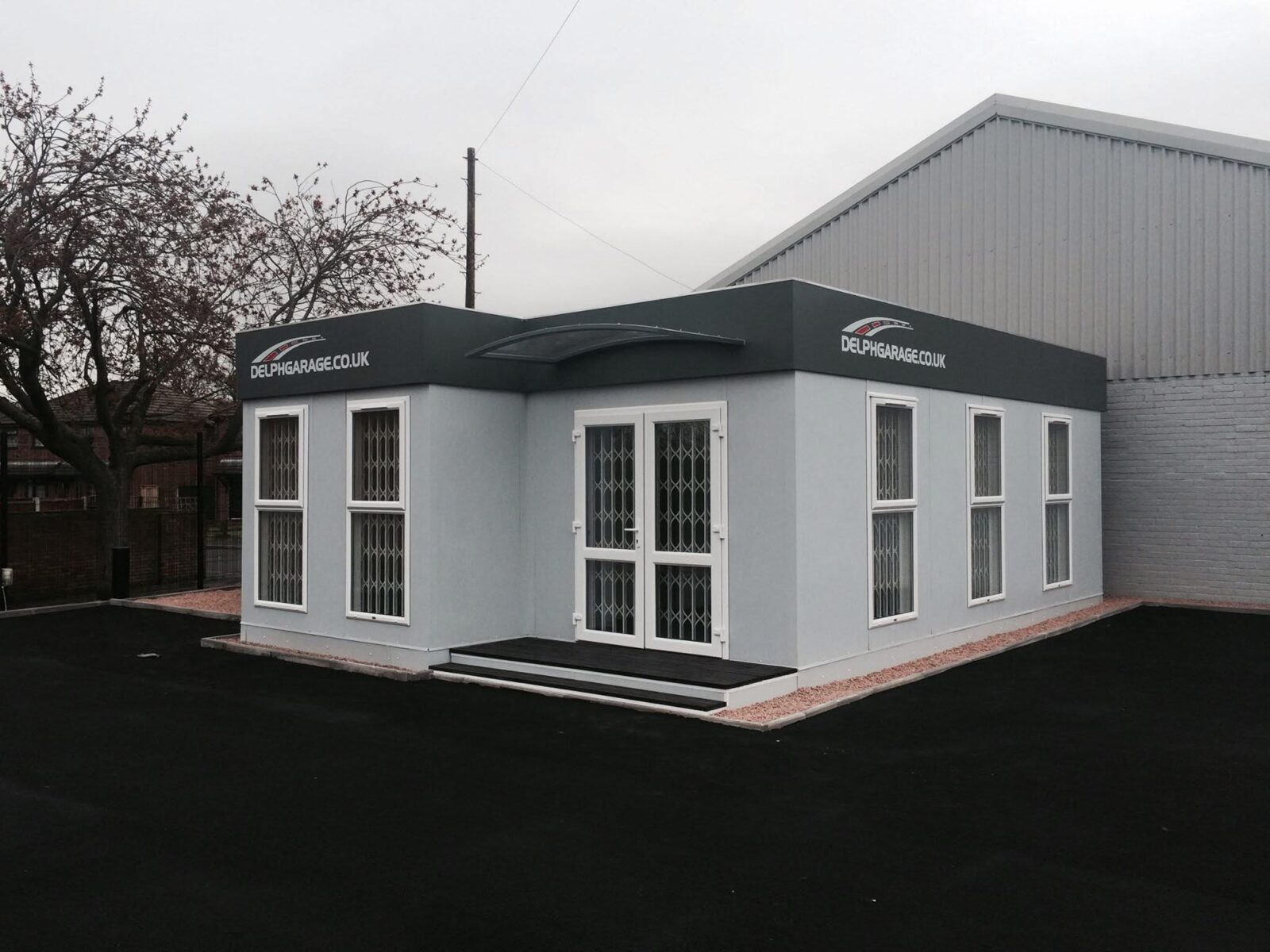
If you’re considering a Modular building for your business, school or organisation, one of the first questions you’ll probably have is: how much does a modular building cost?
The answer depends on several factors, including the size of the building, its intended use, internal specification and the work required to prepare your site.
A small modular office will naturally cost considerably less than a large, multi-storey building containing classrooms, meeting rooms, toilets and specialist facilities.
However, modular construction can offer excellent value compared with traditional building methods, particularly when speed, flexibility and long-term use are important.
In this guide, we’ll explore typical modular building prices in the UK, what influences the overall cost and how to plan your budget before purchasing a modular building.
How Much Does a Modular Building Cost?
Modular building costs vary significantly depending on the type of building required.
As an indication of the UK market, smaller modular buildings can cost tens of thousands of pounds, while larger bespoke developments can cost hundreds of thousands.
For example, published UK supplier guides show new two-bay modular offices starting at approximately £50,000 plus VAT, although this should not be treated as a standard price across all suppliers.
Larger, highly specified modular buildings can cost considerably more.
Some specialist permanent modular building suppliers also publish prices per square metre. However, these can differ substantially depending on the building specification and which elements of the project are included.
For this reason, the most reliable way to establish a realistic budget is to request a quotation based on your actual requirements.
What Factors Affect Modular Building Costs?
There are several important considerations that influence the final price of a modular building.
1. Building Size
The size of your modular building is one of the biggest factors affecting its cost.
A compact Modular Office with a small number of rooms will generally require fewer materials, less manufacturing time and a simpler installation than a large modular complex.
Larger buildings may require multiple modules connected together to create the required floor space.
The number of modules, building dimensions and structural requirements will all influence the overall price.
2. Building Layout
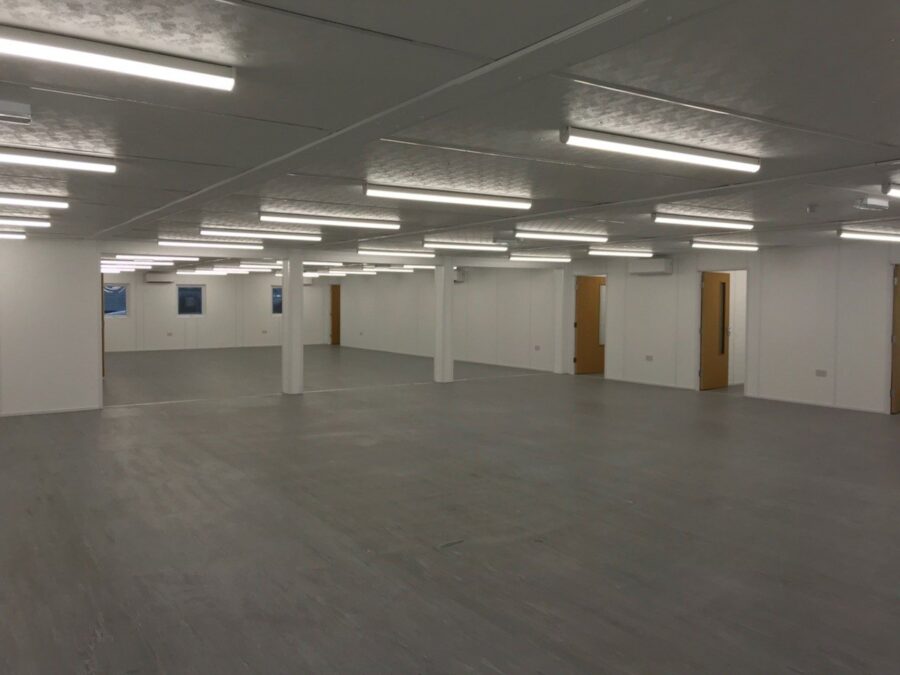
Two Modular buildings with the same floor area can have very different costs depending on their internal layouts.
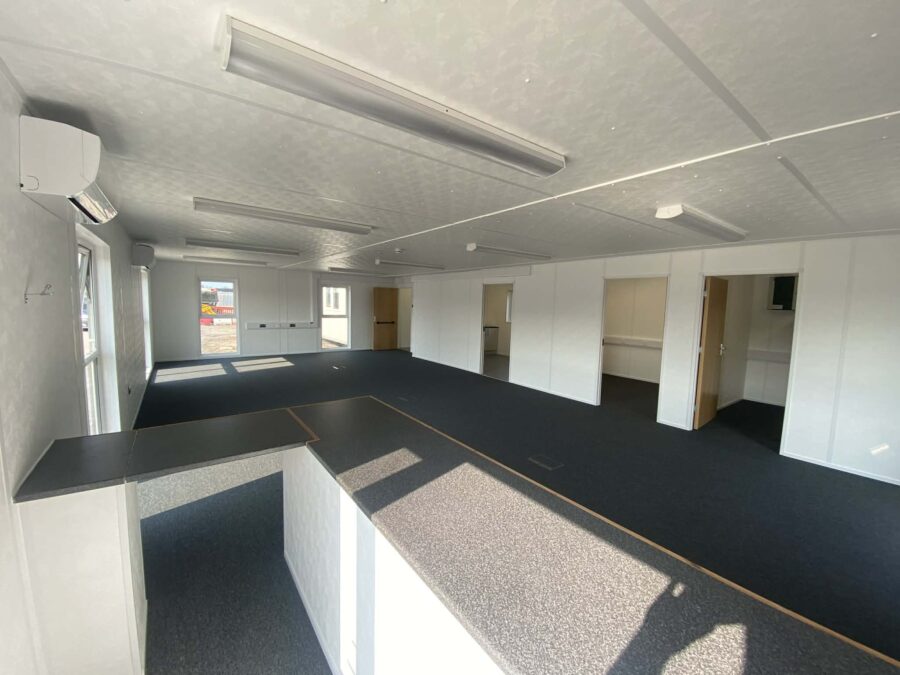
For example, a simple open-plan office may require fewer internal walls, doors and services than a building containing several private offices, meeting rooms, kitchens and washrooms.
More complex layouts can increase the amount of manufacturing and installation work required.
Carefully planning your modular building layout from the beginning can help you make the most of the available space while managing costs.
3. Internal Specification
The internal specification of your Modular building will also influence its price.
Depending on the intended use, your building may require:
- Heating and air conditioning
- Electrical sockets and lighting
- Kitchen facilities
- Toilets and washrooms
- Internal partitions
- Flooring and ceiling finishes
- Data and communication connections
- Accessibility features
- Specialist equipment
A standard office building will have different requirements from a healthcare facility, nursery or specialist classroom.
Choosing the right specification is about finding a balance between functionality, comfort and budget.
4. External Appearance and Finishes
Modular buildings are available with a variety of external finishes.
A straightforward functional building may require a relatively simple exterior, while a customer-facing office or education building may benefit from more architectural detailing.
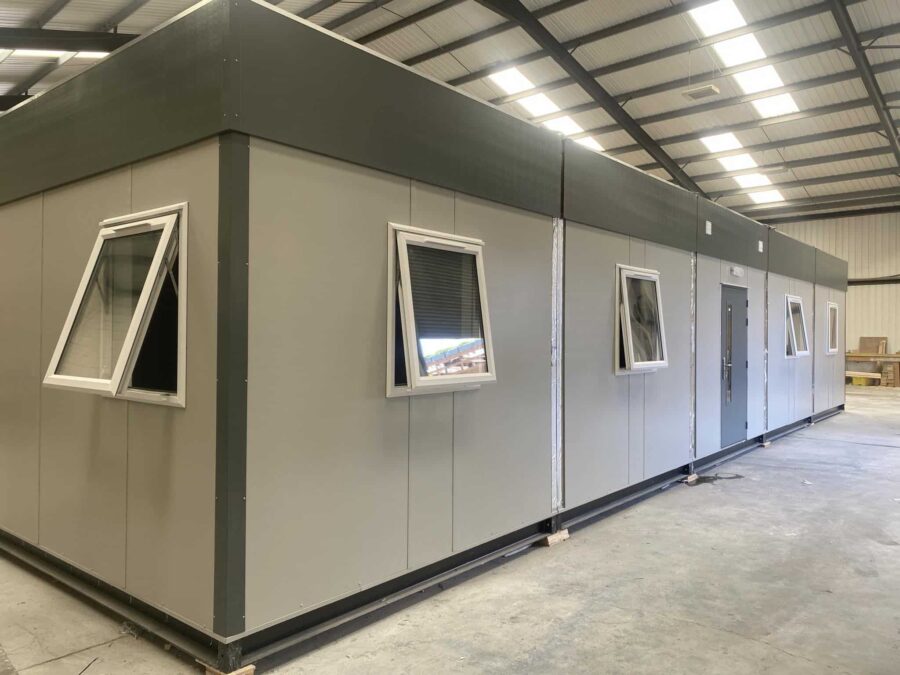
External options can include different cladding systems, glazing arrangements, doors, roofing finishes and colours.
Higher-specification materials and bespoke external designs can increase costs, but may be worthwhile where appearance and long-term performance are important.
5. Single-Storey or Multi-Storey Design
Modular buildings can be configured across one or more storeys.
A single-storey building is often the most straightforward option where sufficient ground space is available.
Multi-storey modular buildings can provide additional floor space on more restricted sites, but may involve additional structural requirements, staircases, access arrangements and more complex installation work.
These factors should be considered when comparing different building configurations.
Are Modular Buildings Cheaper Than Traditional Construction?
Modular construction can be more cost-effective than traditional construction, but this isn’t guaranteed for every project.
One of its biggest advantages is that much of the building is manufactured off-site while groundworks and site preparation can take place simultaneously.
This can reduce the overall construction programme and help minimise disruption.
Potential cost advantages include reduced on-site labour, more controlled manufacturing processes, less material waste and shorter periods of site activity.
However, a fair comparison should consider the complete project cost rather than simply the price of the building itself.
A highly customised modular building may not always be cheaper than an equivalent traditionally constructed building, particularly where specialist finishes or challenging site conditions are involved.
What Additional Costs Should You Consider?
When budgeting for a modular building, it’s important to understand what is included in the quoted price.
The cost of the building itself may not cover every element required to make it ready for use.
Groundworks and Foundations
Before installation, the site must be suitable for the building.
Depending on the location and ground conditions, preparation may include site clearance, levelling, foundations and drainage work.
A straightforward site with good access and stable ground may require less preparation than one with uneven terrain or challenging ground conditions.
Delivery and Installation
Modular buildings are manufactured off-site and transported to their final location.
Delivery costs can be affected by the distance travelled, number and size of modules, vehicle access and any specialist lifting equipment required.
Larger projects may require cranes to position modules onto their foundations.
Utility Connections
Your modular building may require connections to electricity, water, drainage and communication networks.
If suitable services are already available nearby, this may be relatively straightforward.
Where new infrastructure is needed, additional work and expense may be required.
Planning Permission and Building Regulations
Depending on the building’s size, location and intended use, planning permission and other approvals may be necessary.
Professional fees, surveys, applications and compliance-related work should be considered when developing your overall budget.
External Works
You may also need to allow for paths, ramps, steps, parking, landscaping, fencing or other works around the building.
These can be important for accessibility, safety and the day-to-day operation of the facility.
How Much Does a Modular Office Cost?
Modular offices are one of the most popular applications for modular construction.
They can range from compact offices for a small team to large commercial buildings containing multiple departments and facilities.
The cost will depend on the number of occupants, required floor space, internal layout and specification.
A simple open-plan office may be more economical than a building containing several private offices, meeting rooms, kitchens and additional facilities.
If you’re planning a modular office, it’s worth considering how your workforce might change over time.
Allowing for future expansion at the initial design stage may help avoid more disruptive alterations later.
How Much Do Modular Classrooms Cost?
Modular classrooms provide additional teaching space for schools, colleges and education providers.
Costs vary depending on the number of classrooms, pupil capacity, building specification and any additional facilities.
A single classroom will generally be less expensive than a larger education building containing multiple teaching rooms, toilets, offices and specialist learning spaces.
Educational buildings may also require specific accessibility, ventilation, acoustic and safety provisions.
These should be incorporated into the project specification from the outset.
How Much Do Modular Welfare Buildings Cost?
Modular buildings can provide staff welfare accommodation for construction sites, industrial facilities and other workplaces.
Depending on requirements, they may include canteens, toilets, showers, changing rooms, drying facilities and rest areas.
The number of occupants and the extent of plumbing, heating and internal equipment will affect the price.
A basic welfare building will have a different cost profile from a large, fully equipped facility designed to support a substantial workforce.
Are Modular Buildings a Good Long-Term Investment?
Although the initial purchase price is important, it’s also worth considering the long-term value of a modular building.
Modern modular buildings can be designed for long-term use and, depending on their construction and specification, may provide decades of service with appropriate maintenance.
Other potential advantages include the ability to extend, adapt or relocate certain modular buildings as requirements change.
For businesses expecting future growth, this flexibility can be particularly valuable.
Instead of investing in a building that only meets today’s needs, modular construction can provide options for adapting the space in the future.
How Can You Reduce the Cost of a Modular Building?
There are several ways to manage your budget without compromising the building’s essential functionality.
Choose a practical layout. An efficient floor plan can reduce unnecessary corridors, partitions and unused space.
Prioritise essential features. Identify which facilities are necessary from the beginning and which are optional.
Consider standard configurations. Where appropriate, established building layouts may be more economical than highly bespoke designs.
Plan site preparation early. Understanding ground conditions, access and utility requirements can reduce the likelihood of unexpected costs.
Think about future requirements. Planning for expansion or alternative uses can help protect the value of your investment.
Most importantly, discuss your budget and requirements with your modular building supplier early in the process.
How Do You Get an Accurate Modular Building Quote?
Because every project is different, a tailored quotation is the best way to understand the likely cost.
Before requesting a quote, it helps to have a clear idea of:
- What the building will be used for
- Approximately how many people will use it
- Your preferred size and layout
- The facilities you require
- Where the building will be installed
- Your preferred timescale
- Any plans for future expansion
You don’t necessarily need detailed architectural drawings at this stage.
A clear outline of your requirements can provide a useful starting point for discussing suitable options and developing a realistic budget.
Frequently Asked Questions
Are modular buildings cheaper per square metre?
They can be, but the answer depends on the project. Building specification, size, site conditions and the scope of work included in the price all affect the comparison with traditional construction.
Does the price include installation?
Not necessarily. Some suppliers offer comprehensive project quotations, while others price delivery, installation, foundations and utility connections separately. Always check exactly what is included.
Do modular buildings need foundations?
Yes, modular buildings require an appropriate supporting base or foundation system. The exact solution depends on the building and site conditions.
Can I extend a modular building in the future?
Many modular building systems can be extended or reconfigured, subject to their design, structural capacity, site conditions and relevant approvals. If expansion is likely, it’s best to plan for it from the beginning.
Are modular buildings suitable for permanent use?
Yes. Modular buildings can be designed for permanent or long-term use, provided they meet the relevant requirements for their intended application.
Find the Right Modular Building with Spacemaker
At Spacemaker Modular & Portable Buildings, we understand that every project has different requirements and budgets.
Whether you’re looking for a modular office, classroom, welfare facility or larger commercial building, choosing the right solution involves more than simply comparing prices.
Building size, specification, site conditions and future requirements all play an important role in determining the most suitable option.
Our team can help you explore the available modular and portable building solutions and discuss the options that best suit your organisation.
Request a Modular Building Quote
So, how much does a modular building cost?
There is no universal price, but understanding the factors that influence costs can help you plan your project with confidence.
From building dimensions and internal specifications to delivery, groundworks and installation, every element should be considered when setting your budget.
If you’re considering purchasing a modular building, contact Spacemaker Modular & Portable Buildings today to discuss your requirements and request a tailored quotation.
Modular Offices – Modular Nursery Buildings – Modular Buildings – Modular Classrooms