If you’re looking for additional space for your business, school or construction site, you’ve probably come across both modular buildings and portable cabins.
Although the terms are sometimes used interchangeably, there are some important differences between the two.
Both offer a practical alternative to traditional construction, with the potential for faster installation, flexible layouts and reduced disruption. However, they are often designed for different requirements.
A portable cabin may be ideal for a small site office, canteen or welfare facility, while a modular building could provide a larger, more permanent workspace containing multiple rooms or even several storeys.
So, what exactly is the difference between a modular building and a portable cabin?
In this guide, we’ll explain how they compare in terms of size, design, cost, installation and flexibility to help you decide which option is most suitable for your project.
What Is a Modular Building?
A modular building is a prefabricated structure manufactured in individual sections, known as modules, before being transported to its final location.
These modules are assembled on site to create a complete building.
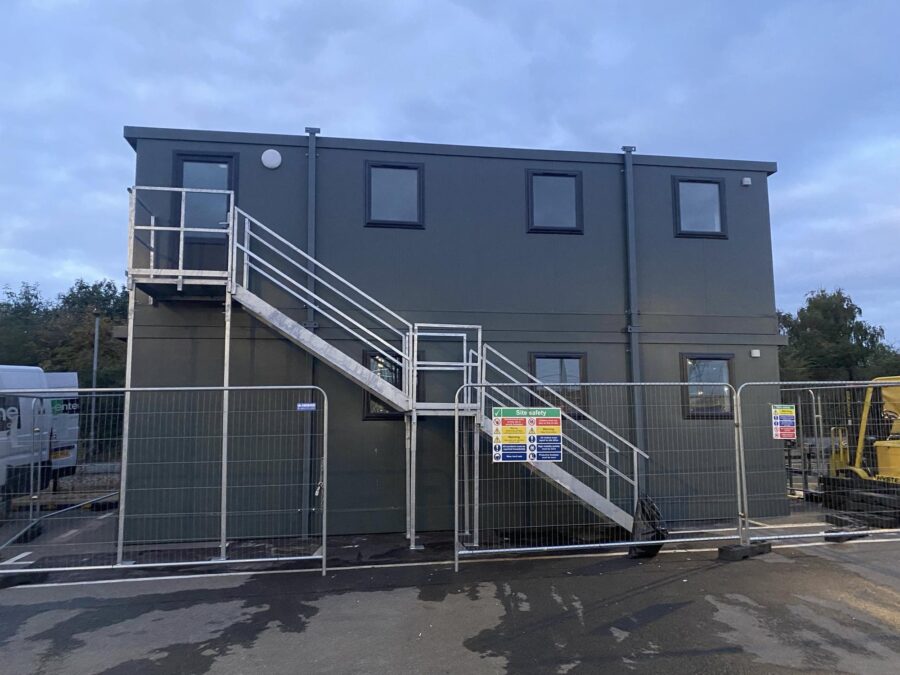
Depending on the project, modular buildings can range from relatively small single-storey structures to large multi-storey developments.
They can be designed to accommodate a wide variety of uses, including:
- Offices
- Classrooms
- Nurseries
- Healthcare facilities
- Staff accommodation
- Welfare facilities
- Commercial buildings
- Reception areas
One of the main advantages of modular construction is its flexibility.
Individual modules can be combined in different configurations to create larger buildings with layouts tailored to the organisation’s requirements.
What Is a Portable Cabin?
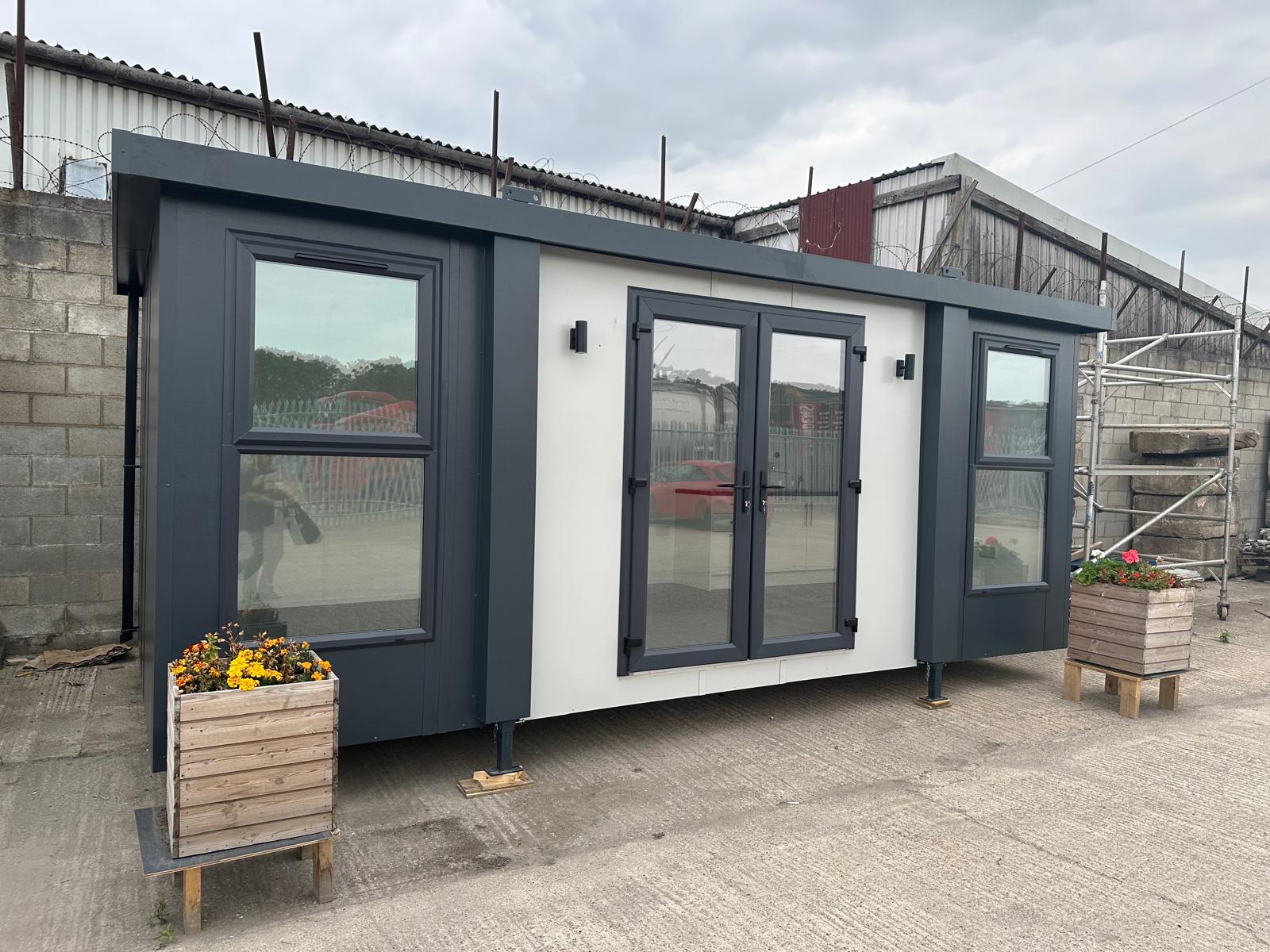
A portable cabin is a prefabricated building designed to be transported to site, often as a complete unit.
Portable cabins are commonly used where businesses require additional accommodation quickly or need a building that may be relocated in the future.
They are particularly popular for:
- Construction site offices
- Staff canteens
- Welfare facilities
- Changing rooms
- Security cabins
- Storage
- Temporary classrooms
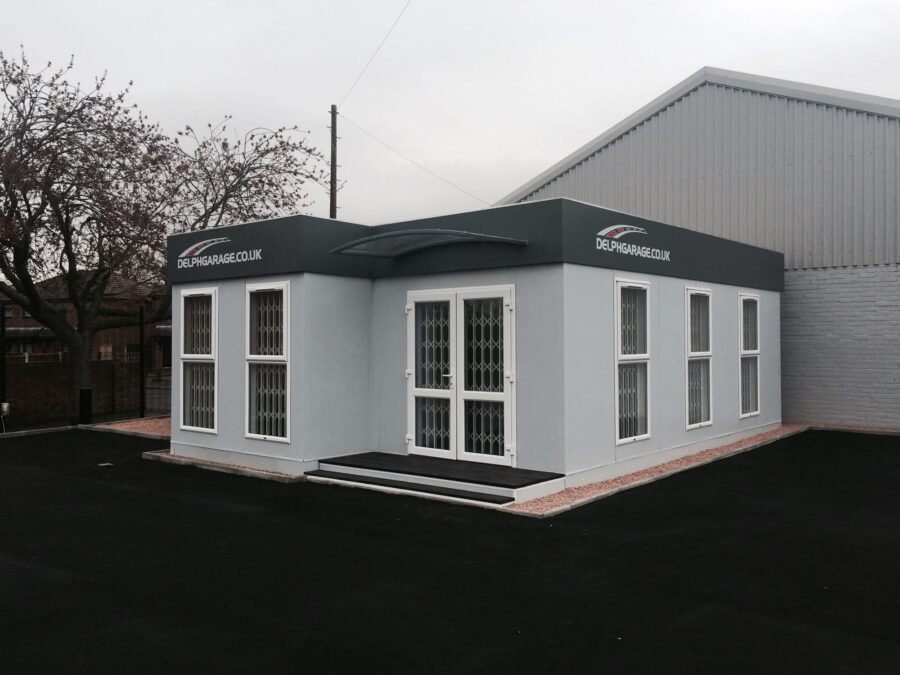
- Small office buildings
Portable cabins can be fitted with heating, lighting, insulation, electrical systems and other facilities depending on their intended use.
Although they are often associated with temporary accommodation, many portable cabins can also provide reliable space over the longer term.
Modular Buildings vs Portable Cabins: Key Differences
The main differences generally relate to the building’s size, configuration, installation and intended application.
| Feature | Modular Buildings | Portable Cabins |
|---|---|---|
| Construction | Manufactured in individual modules | Often manufactured as complete units |
| Typical size | Small to large, including multi-storey | Generally smaller, self-contained units |
| Installation | Modules assembled and connected on site | Often delivered as a complete building |
| Layout flexibility | Highly configurable | Customisable, usually within a more compact footprint |
| Expansion | Can often be extended with additional modules | May be combined or replaced, depending on design |
| Relocation | Possible with suitable building systems | Often designed with relocation in mind |
| Typical uses | Offices, schools, healthcare and commercial buildings | Site offices, welfare units, canteens and storage |
| Cost | Depends on project scale and specification | Often lower initial cost for a small standalone unit |
These are general distinctions rather than fixed rules. Some portable cabins are designed to be linked together, while some modular buildings consist of a single module.
1. Building Size and Capacity
One of the most noticeable differences is the scale of the accommodation.
Modular Buildings
Modular buildings are particularly well suited to projects requiring larger amounts of floor space.
Multiple modules can be joined together to create buildings containing offices, meeting rooms, corridors, toilets and communal areas.
Where appropriate, modules can also be stacked to create multi-storey accommodation.
This makes modular construction a popular choice for larger commercial and education projects.
Portable Cabins
Portable cabins are generally more compact.
A single cabin may provide enough space for a small office, canteen, welfare facility or storage area.
For businesses with relatively straightforward requirements, this can provide a practical solution without the need for a larger modular development.
2. Design and Customisation
Both modular buildings and portable cabins can be customised, but the level of design flexibility may differ.
Modular Buildings
Modular buildings can offer extensive design possibilities.
Depending on the building system, options may include:
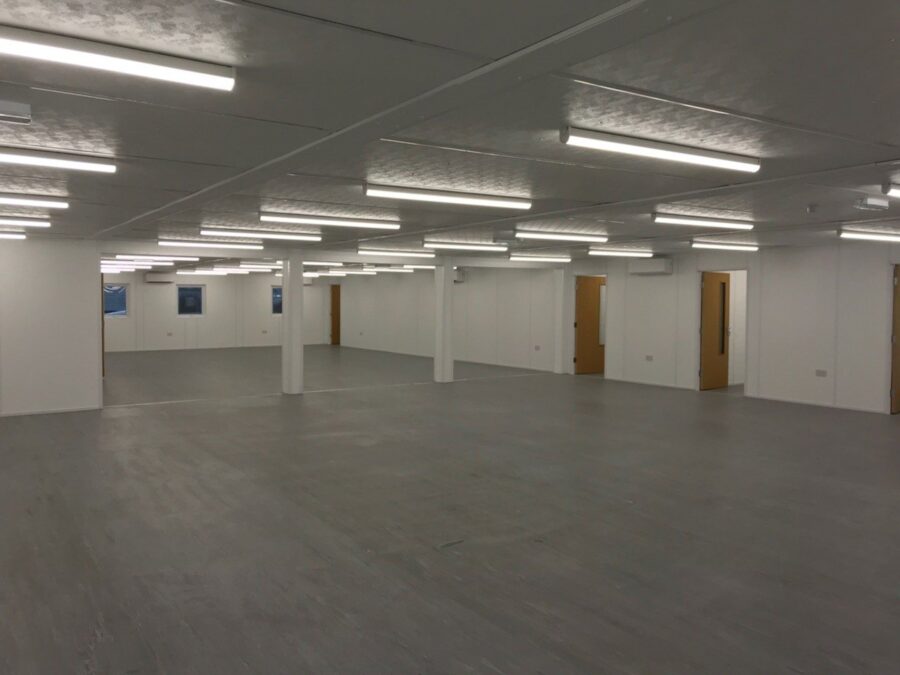
- Open-plan offices
- Multiple meeting rooms
- Reception areas
- Classrooms
- Kitchens
- Toilets and washrooms
- Specialist facilities
- Different external finishes
The ability to combine modules makes it possible to create layouts suited to more complex requirements.
Portable Cabins
Portable cabins can also be configured with different internal layouts and facilities.
A standard cabin may be adapted to include partitions, workstations, kitchen facilities, toilets or secure storage.
However, the available space and dimensions of an individual cabin can place greater limitations on the overall design.
3. Installation Times
Both modular buildings and portable cabins can be installed more quickly than many traditionally constructed buildings.
However, the installation process is not always the same.
Modular Buildings
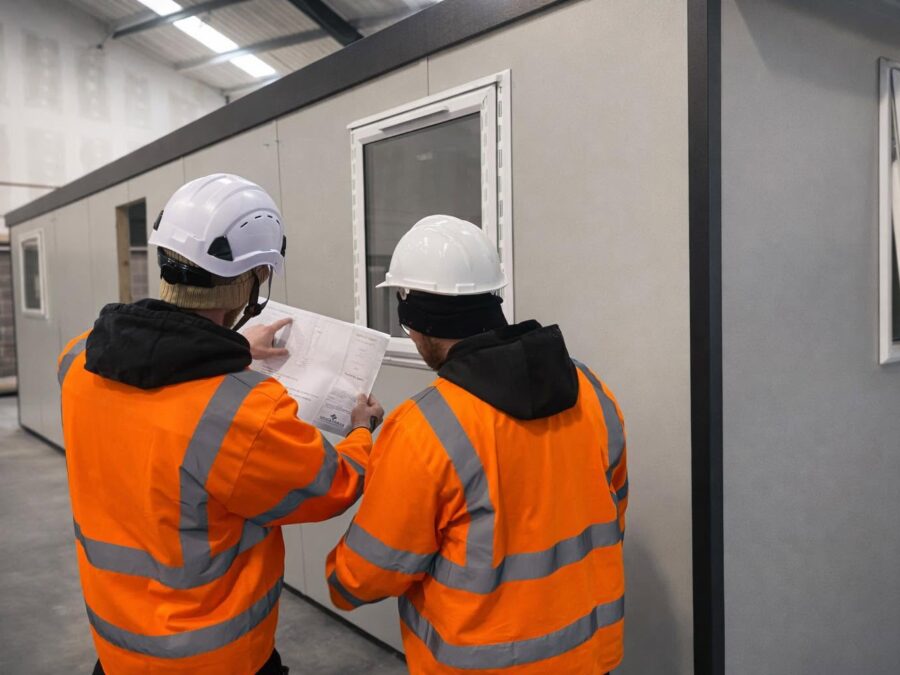
Modular buildings are manufactured off-site before being delivered in sections.
Once the site has been prepared, the modules are positioned and connected to create the finished building.
Larger projects may require additional time for structural connections, internal finishing, utility connections and inspections.
Portable Cabins
Portable cabins are often delivered as complete units.
Where the site is prepared and the necessary services are available, positioning a single portable cabin can be relatively straightforward.
This makes them particularly useful for projects where additional accommodation is needed quickly.
In both cases, the complete project timescale will depend on manufacturing, site preparation, delivery arrangements and any required approvals.
4. Cost Differences
Cost is another important consideration when comparing modular buildings and portable cabins.
A small standalone portable cabin will often have a lower initial purchase price than a larger multi-module building.
However, this is primarily because the buildings may provide very different amounts of space and functionality.
A larger modular building may include multiple offices, meeting rooms, toilets, kitchens and specialist facilities.
When comparing prices, it’s important to consider:
- Total floor area
- Building specification
- Internal facilities
- Delivery
- Installation
- Groundworks
- Utility connections
- Long-term maintenance
The most cost-effective option will depend on what you need the building to achieve.
5. Flexibility and Future Expansion
Modular construction can offer significant flexibility for organisations expecting future growth.
Depending on the original building system, additional modules may be added to expand the available space.
This can be useful for growing businesses, schools requiring additional classrooms or organisations whose accommodation requirements change over time.
Portable cabins can also offer flexibility.
They may be relocated, repurposed or, in some cases, linked with additional units.
However, the possibilities for expansion will depend on the individual cabin’s design and construction.
If future expansion is likely, it’s worth discussing this before purchasing either type of building.
6. Relocation
Both modular buildings and portable cabins may be suitable for relocation.
Portable cabins are often particularly practical for organisations operating across different locations.
For example, construction companies may move site offices and welfare facilities between projects.
Some modular buildings can also be dismantled, transported and reassembled at a new site.
However, relocating a large modular building can involve more complex planning, transportation and reinstallation than moving a smaller portable cabin.
The feasibility will depend on the building’s structure, condition and the requirements of the new site.
7. Durability and Long-Term Use
A common misconception is that portable cabins are temporary buildings while modular buildings are permanent.
In reality, both can provide accommodation for extended periods when appropriately designed and maintained.
Modern modular buildings can be manufactured to meet the requirements of permanent commercial and education facilities.
Similarly, high-quality portable cabins can provide durable accommodation for many years.
The intended lifespan will depend on the building’s specification, materials, installation and maintenance rather than simply whether it is described as modular or portable.
8. Planning Permission and Building Regulations
Both modular buildings and portable cabins may require planning permission and Building Regulations approval.
The fact that a building is portable does not automatically exempt it from planning requirements.
Factors that can influence the planning position include the building’s size, location, intended use and how long it will remain on site.
Certain temporary installations may benefit from permitted development rights, but these are subject to specific conditions.
It’s important to establish the relevant requirements before proceeding with either option.
When Should You Choose a Modular Building?
A modular building may be the most suitable option if you require:
- Larger amounts of floor space
- Multiple rooms or departments
- A bespoke internal layout
- Multi-storey accommodation
- Potential future expansion
- Long-term commercial or education facilities
Modular buildings are particularly well suited to organisations requiring a complete working environment rather than a single standalone unit.
When Should You Choose a Portable Cabin?
A portable cabin may be the better choice if you need:
- A small office
- A construction site cabin
- A staff canteen
- A welfare facility
- Secure storage
- A gatehouse
- A compact standalone building
Portable cabins are particularly useful where the accommodation requirements are relatively straightforward or where relocation may be important.
Are Modular Buildings and Portable Cabins Energy Efficient?
Both types of building can incorporate features designed to improve energy efficiency.
Depending on the specification, these may include:
- High-performance insulation
- Double glazing
- LED lighting
- Efficient heating systems
- Improved ventilation
- Energy-efficient doors and windows
Energy performance depends on the building’s design, materials and systems rather than whether it is described as modular or portable.
When comparing buildings, it’s worth considering both the initial purchase price and potential long-term running costs.
Frequently Asked Questions
Are modular buildings better than portable cabins?
Not necessarily. Modular buildings are often better suited to larger or more complex accommodation requirements, while portable cabins can be ideal for smaller standalone facilities. The right option depends on the project.
Can portable cabins be used permanently?
Yes. Portable cabins can provide long-term accommodation when they are appropriately specified, installed and maintained, subject to the relevant planning and building requirements.
Are modular buildings more expensive than portable cabins?
Larger modular buildings generally cost more overall than small portable cabins because they provide more space and facilities. However, prices should be compared based on equivalent floor area, specification and project requirements.
Can portable cabins be joined together?
Some portable cabins can be linked together to create larger accommodation. However, this depends on the building system and whether the units are designed for connection.
Do modular buildings last longer than portable cabins?
Not automatically. The lifespan of either building depends on construction quality, materials, environmental exposure and maintenance.
Find the Right Building with Spacemaker
At Spacemaker Modular & Portable Buildings, we understand that every organisation has different accommodation requirements.
Whether you’re looking for a compact portable office, a secure site cabin, a welfare facility or a larger modular building, choosing the right solution is essential.
Our team can help you explore the available options based on your required floor space, intended use, site conditions and longer-term plans.
By considering these factors from the beginning, you can find a building that provides the right balance of functionality, flexibility and value.
Modular Buildings or Portable Cabins: Which Is Right for You?
So, what is the difference between a modular building and a portable cabin?
The main distinction is generally how the building is configured and the scale of accommodation it provides.
Modular buildings are often assembled from multiple sections to create larger, highly configurable spaces, while portable cabins are commonly supplied as smaller, self-contained units.
Both can provide practical, durable and flexible alternatives to traditional construction.
If you’re considering additional accommodation for your business, school or construction site, contact Spacemaker Modular & Portable Buildings today to discuss your requirements and find the most suitable building solution.
Modular Buildings – Portable Cabins – Modular School Buildings – Portable Office Cabins