When a business needs additional office space, one of the first decisions is how that space should be created. Should you invest in a traditionally constructed office building, or would a Modular Office provide a faster and more cost-effective solution?
Both options have their advantages, and the right choice will depend on your organisation’s budget, timescales, long-term plans and operational requirements.
Over the last decade, modular construction has become increasingly popular across the UK. Once associated primarily with temporary site accommodation, modern Modular Offices now offer high-quality, energy-efficient workspaces that rival traditional buildings in both appearance and performance.
In this guide, we’ll compare Modular Offices and traditional construction across the factors that matter most to businesses.
What Is a Modular Office?
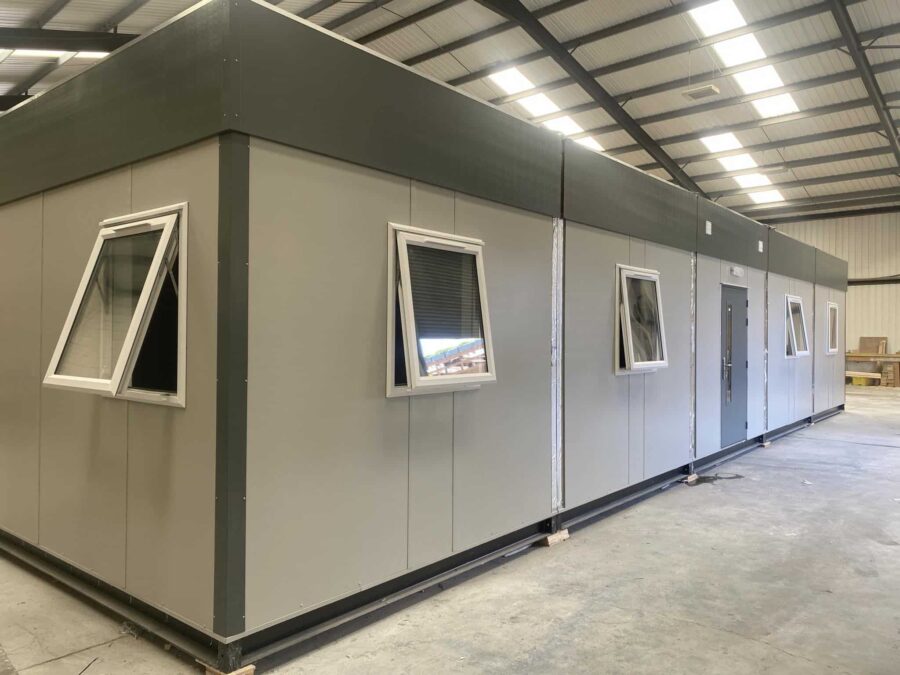
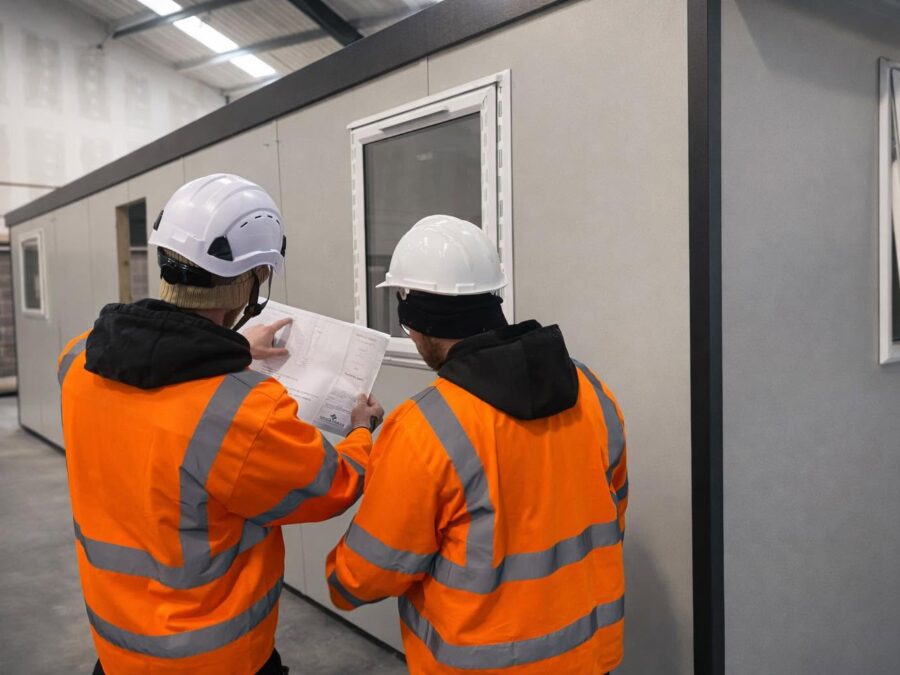
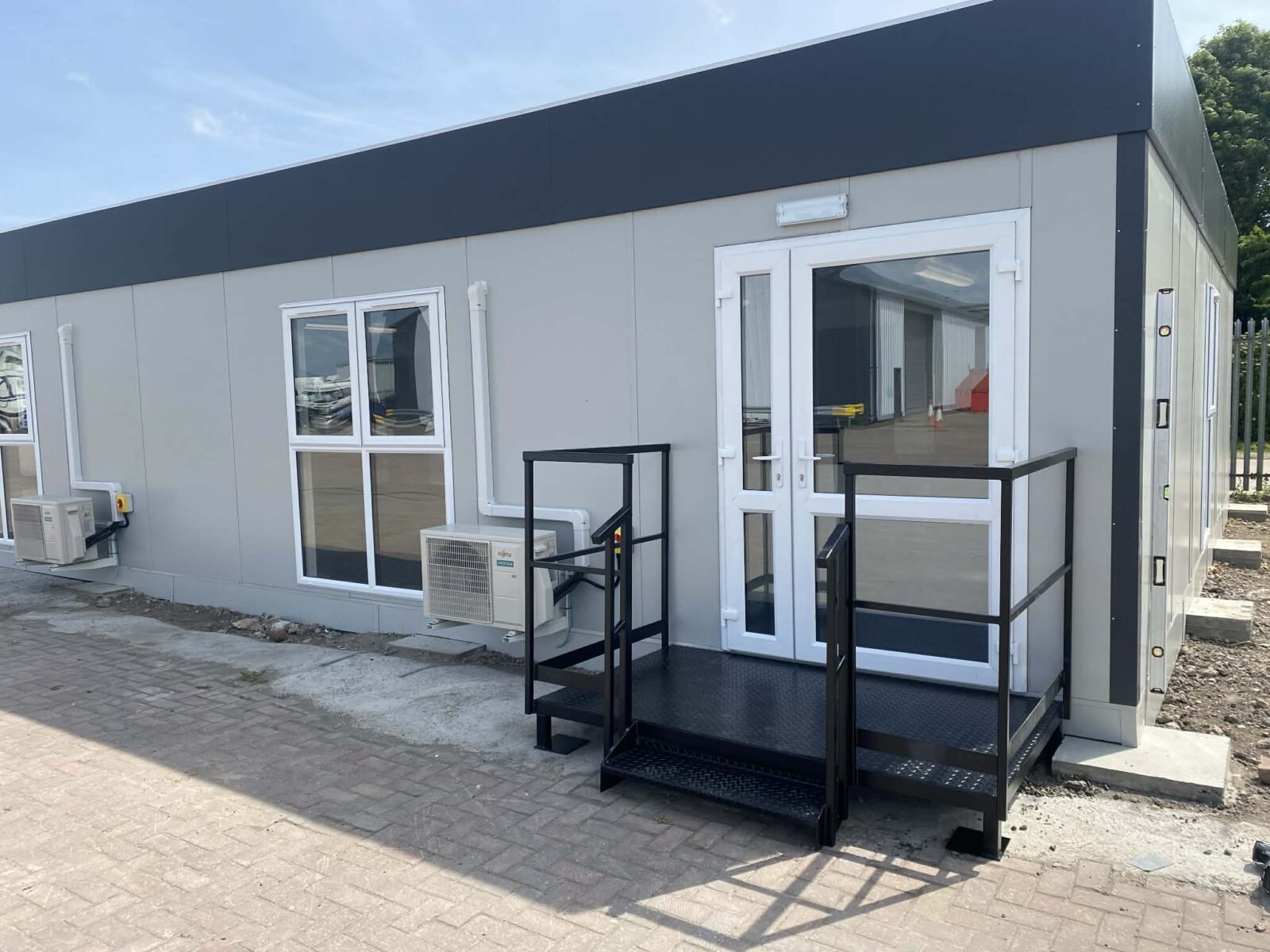
A Modular Office is a prefabricated building manufactured in sections, known as Modules, within a factory-controlled environment. Once complete, the Modules are transported to the site and assembled to create a fully functioning office building.
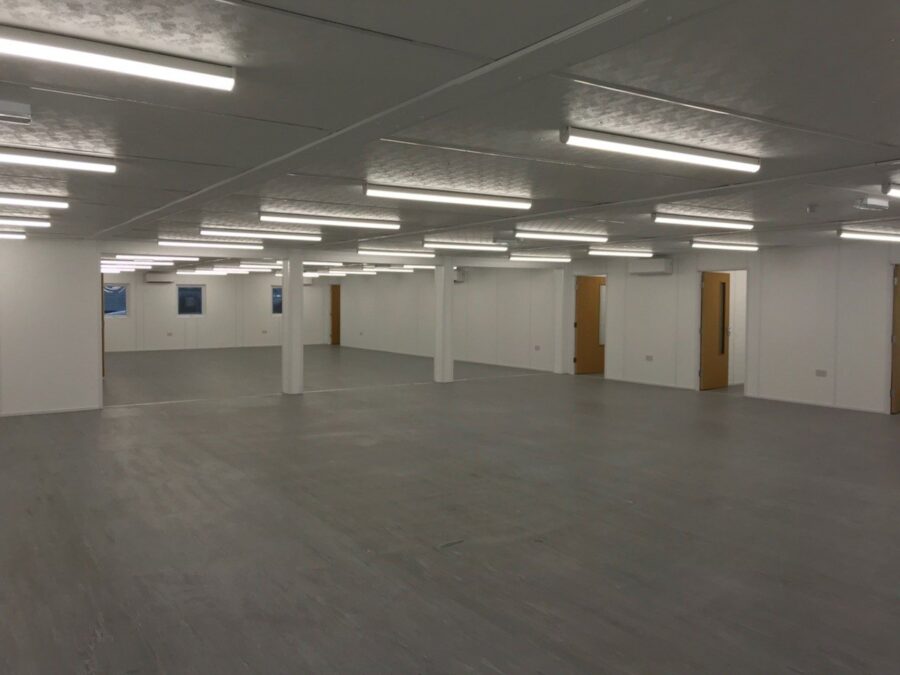
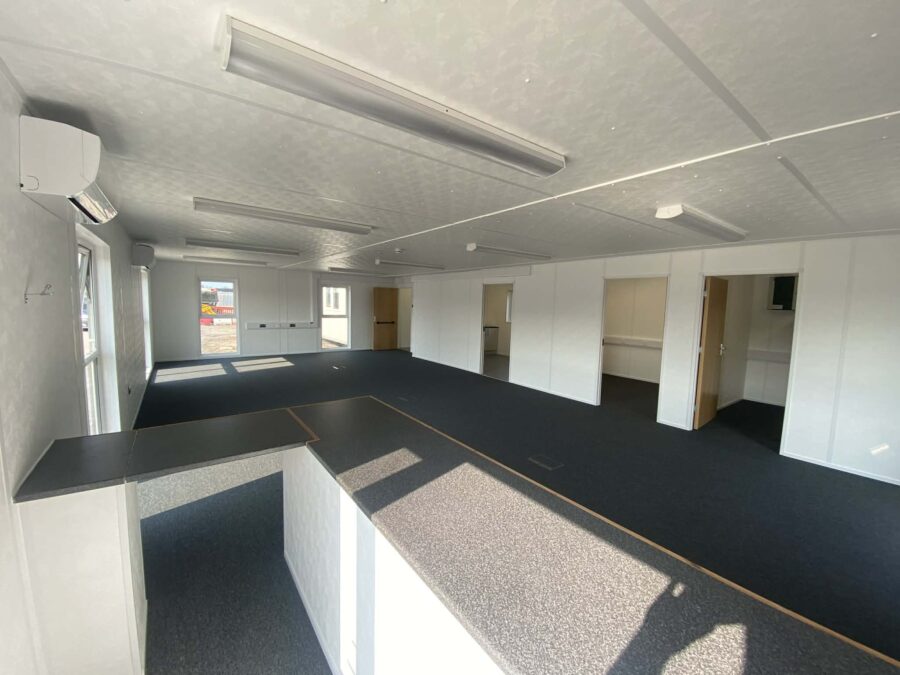
Modular Offices can range from compact single-office units through to large multi-storey office complexes and can be customised to include:
- Reception areas
- Open-plan offices
- Private offices
- Meeting rooms
- Kitchen facilities
- Staff welfare areas
- Washrooms
- Storage rooms
Modern Modular Offices are designed to provide the same level of comfort, functionality and durability expected from permanent office accommodation.
What Is Traditional Construction?
Traditional construction involves building an office entirely on-site using conventional building methods.
Typically, this process includes:
- Groundworks
- Foundations
- Structural framework
- Roofing
- Brickwork or cladding
- Mechanical and electrical installations
- Internal finishes
- Decoration
- Landscaping
Because every stage takes place on site, projects are often more vulnerable to weather conditions and longer construction programmes.
Speed of Construction
One of the biggest differences between Modular and traditional construction is the overall project timescale.
Modular Offices
The majority of construction takes place away from the site, while groundworks and utility preparation can happen at the same time.
This parallel approach allows projects to progress far more efficiently and can significantly reduce overall delivery times.
For businesses that need office space quickly, this can be a major advantage.
Traditional Construction
Traditional buildings are generally constructed in sequence, meaning each stage must be completed before the next can begin.
This often results in longer construction programmes and can increase the likelihood of delays caused by weather or site conditions.
Cost Considerations
Cost is an important factor for every organisation.
Modular Offices
Modular construction can often help reduce overall project costs through:
- Faster installation
- Reduced labour requirements
- Improved manufacturing efficiency
- Less on-site disruption
- Better cost certainty
Because buildings are manufactured in a controlled environment, there is often greater consistency in budgeting and fewer unexpected costs.
Traditional Construction
Traditional projects may involve additional costs associated with:
- Extended labour requirements
- Longer site occupation
- Greater exposure to weather delays
- Higher levels of construction waste
- Longer project management periods
Every project is different, so costs should always be assessed based on the specific requirements.
Flexibility for Future Growth
Businesses evolve, and office requirements often change over time.
Modular Offices
One of the biggest strengths of Modular construction is flexibility.
Buildings can often be:
- Extended
- Reconfigured
- Relocated
- Expanded with additional modules
- Adapted for different uses
This makes Modular Offices particularly attractive for growing businesses or organisations with changing operational needs.
Traditional Construction
Expanding a traditional office building often requires further construction work, planning approvals and disruption to existing operations.
While extensions are certainly possible, they can be more complex and costly than expanding a Modular Building.
Quality and Performance
A common misconception is that Modular Offices offer lower quality than traditionally constructed buildings.
In reality, modern Modular Buildings are manufactured using advanced construction techniques and rigorous quality control processes.
Benefits include:
- Precision manufacturing
- Consistent workmanship
- High-quality finishes
- Excellent thermal performance
- Long-term durability
Traditional construction also delivers excellent quality, but workmanship can vary depending on site conditions and weather during construction.
Energy Efficiency
Energy efficiency is becoming increasingly important for businesses looking to reduce operating costs and improve sustainability.
Modern Modular Offices can incorporate:
- High-performance insulation
- Double or triple glazing
- LED lighting
- Energy-efficient heating systems
- Smart building controls
- Sustainable materials
Traditional buildings can also achieve excellent energy performance, but Modular manufacturing often provides greater consistency in insulation and airtightness due to factory-controlled production.
Sustainability
Environmental responsibility is now a priority for many organisations.
Modular Construction
Modular construction offers several environmental benefits, including:
- Reduced material waste
- More efficient manufacturing
- Fewer vehicle movements
- Reduced site disruption
- Reusable building modules
- Lower embodied carbon in many projects
Because buildings can often be relocated or repurposed, modular construction supports a more circular approach to building use.
Traditional Construction
Traditional construction remains a proven building method, but it can generate more waste and require a longer on-site construction period.
Material deliveries, site activity and waste management may all contribute to a larger environmental footprint.
Disruption to Business Operations
For organisations remaining operational during construction, disruption can be a major concern.
Modular Offices
Since most manufacturing takes place away from the site, installation periods are generally shorter.
This can reduce:
- Noise
- Dust
- Vehicle movements
- Site congestion
- Health and safety risks
Many businesses find this particularly valuable when expanding existing premises.
Traditional Construction
On-site construction activity typically continues throughout the project.
This can create greater disruption for employees, visitors and neighbouring businesses.
Design Flexibility
Both Modular and traditional construction offer significant design flexibility.
Modern Modular Offices can include:
- Contemporary external finishes
- Corporate branding
- Large glazed areas
- Open-plan layouts
- Premium interiors
- Accessible facilities
Traditional construction also provides extensive design freedom, particularly for highly bespoke architectural projects.
For most commercial office applications, however, Modular Buildings can achieve an appearance that is virtually indistinguishable from conventional buildings.
Durability and Lifespan
Another common myth is that Modular Buildings have a shorter lifespan.
In reality, modern Modular Offices are designed to provide many decades of reliable use when properly maintained.
They are constructed to meet relevant building regulations and can offer durability comparable to traditionally built offices.
The key to long-term performance lies in quality design, appropriate materials and regular maintenance rather than the construction method itself.
Which Option Is Right for Your Business?
The best solution depends on your individual circumstances.
A Modular Office may be the ideal choice if you:
- Need office space quickly
- Want minimal disruption
- Expect future expansion
- Require a flexible building
- Want predictable project costs
- Value sustainability
Traditional construction may be more appropriate if your project involves:
- Highly complex architecture
- Extensive bespoke structural features
- Integration with an existing permanent building where conventional construction is more practical
For many organisations, modular construction provides the ideal balance between speed, flexibility, quality and value.
Why Choose Spacemaker Modular & Portable Buildings?
At Spacemaker Modular & Portable Buildings, we have more than 30 years of experience supplying Modular Office buildings throughout the UK.
We work with businesses across a wide range of sectors, delivering office accommodation that is practical, comfortable and designed around each customer’s specific requirements.
Whether you require a single portable office, a Modular Office building or a larger commercial workspace, our experienced team can help you find the right solution.
From the initial consultation through to delivery and installation, we focus on providing high-quality buildings that support your organisation both now and in the future.
Explore Your Modular Office Options
Choosing between a Modular Office and traditional construction is an important decision, but for many businesses, Modular Buildings offer an excellent combination of speed, flexibility, sustainability and long-term value.
With modern construction techniques, high-quality finishes and the ability to adapt as your organisation grows, modular offices have become an increasingly popular choice across the UK.
If you’re planning new office accommodation, contact Spacemaker Modular & Portable Buildings today. Our team will be happy to discuss your requirements and help you determine the most suitable solution for your business.